Bird watching in Pashan Lake, Pune
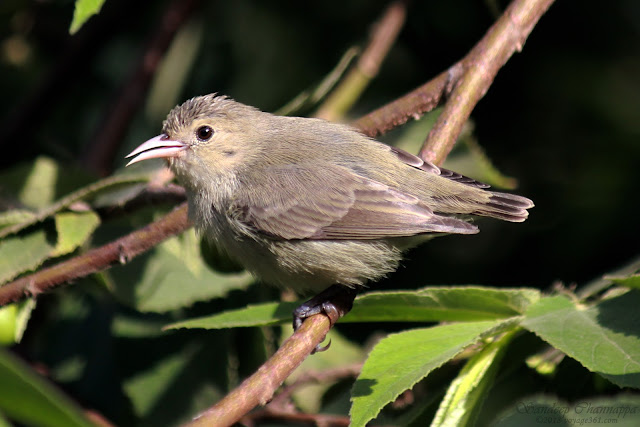 |
| The tiny little Pale-billed Flowerpecker at the Pashan Lake, Pune |
Pashan Lake is considered as hotspot for birds.With nearly 210 avian species reported in this lake, it is the third best place in Pune city for bird watching after Kavdi Pat and Vetal tekdi.
It hosts both resident and migratory birds due to its thick tree canopies surrounding the water body. The best time to visit the lake is during the winters, although resident birds are seen round the year.
Bird watchers from Pune have noticed there have been significant decline in the bird species spotted at Pashan Lake since last few decades, specifically the migratory birds. The decline is arguably due to the ‘beautification’ project conducted by the Pune Municipal Corporation. Its simply natural habitat attracts more life than the artificial habitats.
Birds of Pashan Lake:
Some of the popular bird sightings at Pashan Lake includes the migratory Northern Shoveler, Lesser Whistling-Duck, Ruddy Shelduck, Garganey, Common Pochard, Common Sandpiper, Green Sandpiper, River Tern, Eurasian Spoonbill, Eurasian Marsh-Harrier, Gray Wagtail and Western Yellow Wagtail. They usually arrive after the October month.
Apart from the migratory birds the local sightings include the Spot-breasted Fantail, Tickells Blue flycatcher, Pheasant-tailed Jacana,Common Iora, Indian Golden Oriole, Long-tailed Shrike, Baya Weaver, White-breasted Waterhen, Indian Gray Hornbill, Laughing Dove, and the more common birds Greater Coucal, Asian Koel, Gray-headed Swamphen, Eurasian Coot, Gray Herons, Purple Herons, Ibis, Egrets, Cormorants, Coppersmith Barbet and Wire-tailed Swallow.
Birding experience:
I got to visit the lake twice, in June and later in September month. Bird activity starts right from the entrance gate and continues till the end of the jogging tracks. Once you enter through the main entrance of the lake and walk till the lake, there are two jogging tracks one on the left and another on the right.
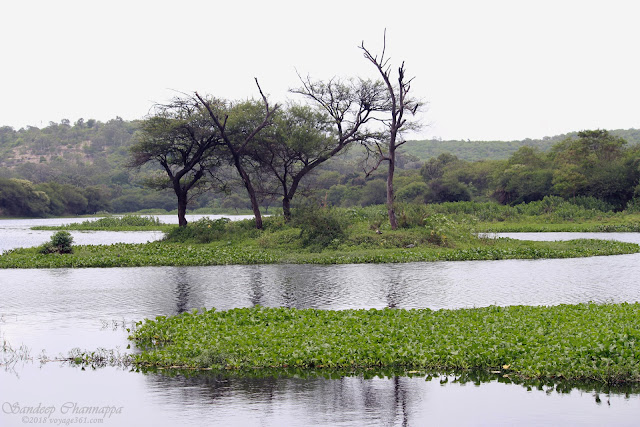 |
| Pashan Lake |
1st Visit in June 2018:
On my first visit I explored only the right side jogging track. It was late in the morning at 11 a.m, so with very less expectations started my bird walk. I was greeted by Green Bee-eaters and Wire-tailed Swallows, busy looking for their prey in the lake. This followed by the White-spotted fantails, these are often seen moving over the branches of the trees and on the ground looking for its food and it often fans its tail as it moves which makes them a treat to watch.
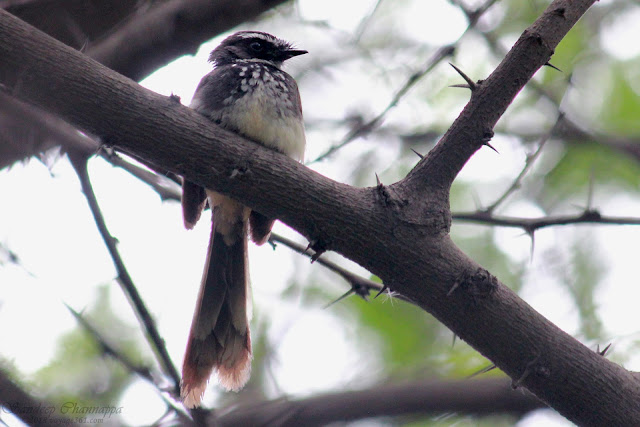 |
| White-spotted fantail looking away |
Black Drongos were seen throughout the jogging track, at least ten of them. At the lake bed there were Indian Golden Orioles flying across over the trees looking for their prey.
There were many small beauties Oriental White-eye, Tickell's Blue Flycatcher, Pale-billed Flowerpecker, Purple-rumped Sunbird, Purple Sunbird, Ashy and Plain Prinia. There were Pied Cuckoo's, at least five spotted.
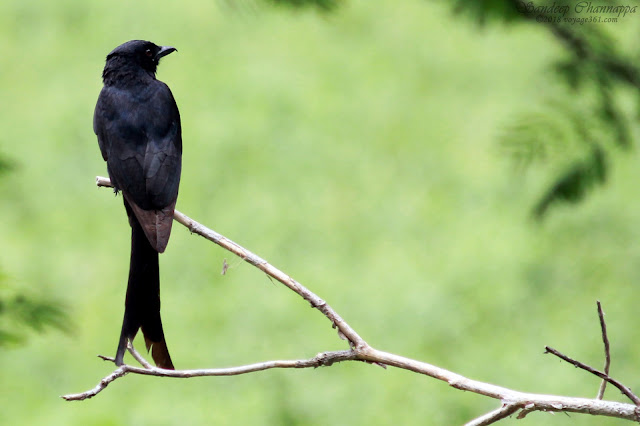 |
| Black Drongo watching out for its prey |
At the lake were the waterfowl's Indian Spot-billed Duck, Eurasian Coot, Pheasant-tailed Jacana, Gray-headed Swamphen, and the islands were occupied by the Gray Heron, Egrets, Glossy Ibis and Black-headed Ibis.
It started to rain and with no place to hide, stood with my umbrella. After the drizzle spotted a small group of White-bellied Minivet, which was a lifer for me.
 |
| This Squirrel came just beside me, while I was resting on a park bench |
Checklist of birds at ebird:
https://ebird.org/view/checklist/S46590973
2nd Visit in Sep 2018:
This time around reached the lake by 8.30 a.m, although initial plan was to reach at dawn. There was bird activity right from the main entrance, several Oriental Magpie-Robins were seen near the kids play area.
There was a tiny little bird over a small tree, busy looking for its food, it was the Pale-billed Flowerpecker. It is tiny at about 8 cm and one of the smallest birds found in India. It was a pleasure to watch their cute little moves, actively jumping across the branches.
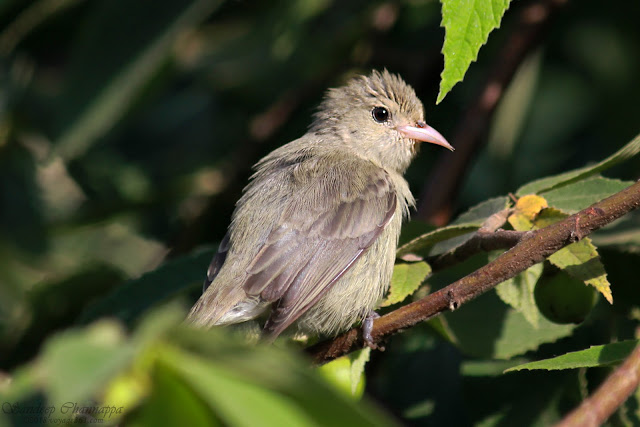 |
| One of the smallest birds found in India - The Pale-billed Flowerpecker |
Followed by this there were White-spotted fantails all through the jogging track on the right side. At the lake side there were the migratory Eurasian Spoonbill, a pair of Red-naped Ibis, and Cormorants already arrived, but the Pheasant-tailed Jacana, Eurasian Coot, and spot-billed ducks were not seen this time. The White-spotted fantails continued to amuse me with their fancy moves, this time there were juveniles too.
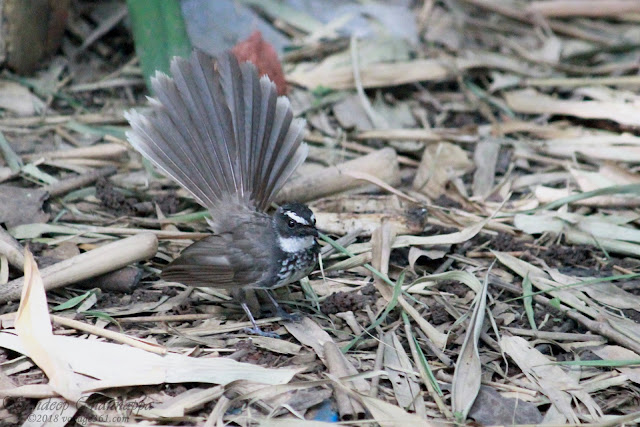 |
| This White-spotted fantail was seen with its fancy moves for a long time before I could snap this |
After covering the stretch on the right pathway, I explored the jogging track on the left. Spotted a flock of Baya Weavers and a pair of Cinereous Tit, apart from these there was very less bird activity in this part of the lake.
 |
| The jogging track at Pashan lake, beautiful isn't it! |
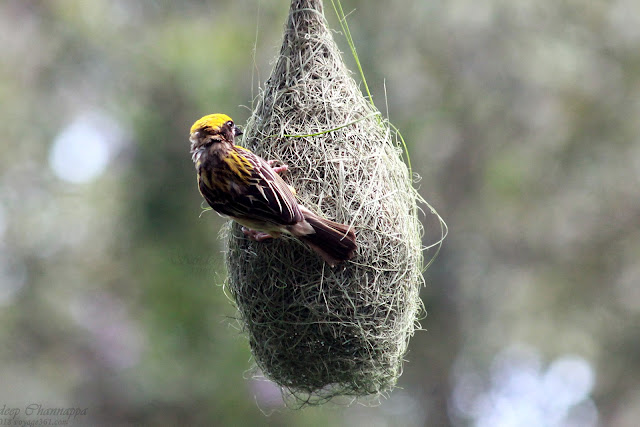 |
| Baya Weaver (male) |
Checklist of birds at ebird:
https://ebird.org/view/checklist/S48430699
Pashan Lake Life List (Full list of birds spotted from both the visits)
:
- Ashy Prinia (Prinia socialis)
- Baya Weaver (Ploceus philippinus)
- Black Drongo (Dicrurus macrocercus)
- Black Kite (Milvus migrans)
- Black-headed Ibis (Threskiornis melanocephalus)
- Cattle Egret (Bubulcus ibis)
- Cinereous Tit (Parus cinereus)
- Common Myna (Acridotheres tristis)
- Eurasian Coot (Fulica atra)
- Eurasian Spoonbill (Platalea leucorodia)
- Glossy Ibis (Plegadis falcinellus)
- Gray Heron (Ardea cinerea)
- Gray-headed Swamphen (Porphyrio poliocephalus)
- Greater Coucal (Centropus sinensis)
- Green Bee-eater (Merops orientalis)
- House Crow (Corvus splendens)
- House Sparrow (Passer domesticus)
- Indian Cormorant (Phalacrocorax fuscicollis)
- Indian Golden Oriole (Oriolus kundoo)
- Indian Pond-Heron (Ardeola grayii)
- Indian Robin (Copsychus fulicatus)
- Indian Spot-billed Duck (Anas poecilorhyncha)
- Intermediate Egret (Ardea intermedia)
- Jungle Myna (Acridotheres fuscus)
- Large-billed Crow (Corvus macrorhynchos)
- Laughing Dove (Streptopelia senegalensis)
- Little Egret (Egretta garzetta)
- Oriental Magpie-Robin (Copsychus saularis)
- Oriental White-eye (Zosterops palpebrosus)
- Pale-billed Flowerpecker (Dicaeum erythrorhynchos)
- Pheasant-tailed Jacana (Hydrophasianus chirurgus)
- Pied Cuckoo (Clamator jacobinus)
- Plain Prinia (Prinia inornata)
- Purple Sunbird (Cinnyris asiaticus)
- Purple-rumped Sunbird (Leptocoma zeylonica)
- Red-naped Ibis (Pseudibis papillosa)
- Red-vented Bulbul (Pycnonotus cafer)
- Red-wattled Lapwing (Vanellus indicus)
- Red-whiskered Bulbul (Pycnonotus jocosus)
- Rock Pigeon (Columba livia (Feral Pigeon))
- Spot-breasted Fantail (Rhipidura albogularis)
- Tickell's Blue Flycatcher (Cyornis tickelliae)
- White-bellied Minivet (Pericrocotus erythropygius)
- White-throated Kingfisher (Halcyon smyrnensis)
- Wire-tailed Swallow (Hirundo smithii)


Comments
Post a Comment