Birding in Hesaraghatta Lake

Birding in Hesaraghatta Lake, Bengaluru
Black-winged Stilts at the Hesaraghatta Lake bed
Black-winged Stilts at the Hesaraghatta Lake bed
Having heard about the Hesaraghatta Lake for its abundant avian species, had planned my visit over the weekend.

About the lake:
Hesaraghatta Lake is actually a man-made reservoir built across the Arkavathy river in 1894. It served as a drinking water supply for Bengaluru city. The lake stretches over 3km long and nearly 1km wide during monsoons and the lake surface area covers upto 1,100 acres at its full capacity. The lake bed is surrounded by the grasslands which attracts raptors, shrikes and many resident bird species, and the lake itself attracts the water birds. Hesaraghatta used to be very popular among the birders when the Vultures and Eagles were commonly sighted. But today due to constant deterioration of the lake and increasing human intervention, the avian species count have drastically decreased.

Birds of Hesaraghatta Lake:
Hesaraghatta Lake has reported more than 240 species of birds till date, and is the second best bird hotspot in Bengaluru after Valley school (in terms of number of species recorded).
The list of birds goes long, some of the popular bird spotting at Hesaraghatta Lake are the Indian Peafowl, Gray Francolin, Laughing Dove, Greater Coucal, Asian Koel, Common Hawk-Cuckoo, Black-winged Stilt, Spotted Owlet, Eurasian Hoopoe, Indian Roller, Coppersmith Barbet, Ashy-crowned Sparrow-Lark, Jerdon's Bushlark, Oriental Skylark, White-browed Bulbul, Baya Weaver, Scaly-breasted Munia, Pied Bushchat, Indian Silverbill, Blue-faced Malkoha, Pied Cuckoo, Indian Golden Oriole and Rufous Treepie
The commonly spotted shrikes include the Brown Shrike, Bay-backed Shrike and Long-tailed Shrike. The migratory birds which visit the lake every year include the Little Ringed Plover, Common Sandpiper, Green Sandpiper, Wood Sandpiper, Black-headed Ibis, Rosy Starling and Siberian Stonechat.
Common sightings of raptors include Oriental Honey-buzzard, White-eyed Buzzard, Eurasian Marsh-Harrier, Tawny Eagle, Booted Eagle, Black-winged Kite, Short-toed Snake-Eagle, Eurasian Marsh-Harrier, Shikra and Eurasian Kestrel.
There have been reports of endangered species (under IUCN Red List) spotted here including the Egyptian Vulture and Steppe eagle and vulnerable species Indian Spotted Eagle, Greater Spotted Eagle, Pallid Harrier and Woolly-necked Stork.

Birding experience:
It was the beginning of the migratory season, reached the lake parking by 8.30 a.m. Started my bird walk along the lake bund followed by the grasslands. To begin with, there was a group of House sparrows near the temple, which have become a rare spotting in Bengaluru city. This was the first time I spotted sparrows in Bengaluru. Further down there was a small flock of Scaly-breasted Munia's.
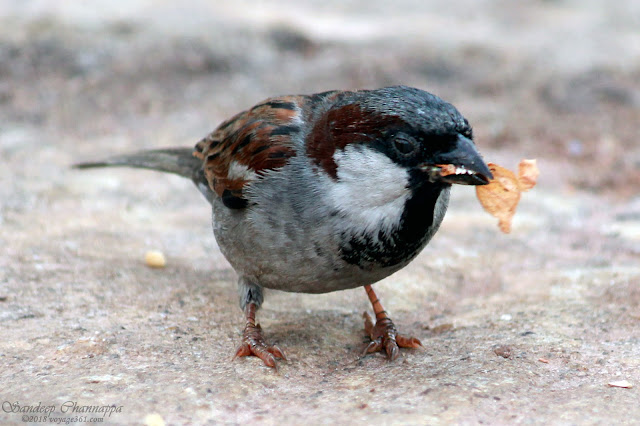
A male House Sparrow - They have become a rare sight in Bengaluru city
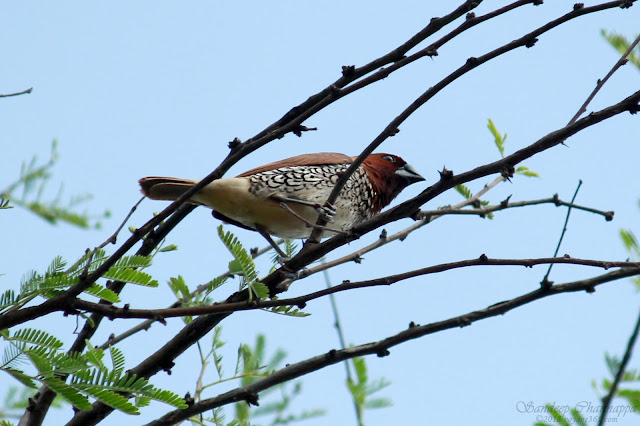
Scaly-breasted Munia
River terns were seen hovering around the lake in search of their prey. A group of Black-winged Stilt were seen at the edge of the lake along with the Gray Herons, Cormorants, Egrets and a lone Glossy Ibis. Eurasian Coot's were seen all across the lake.
The long legged Black-winged Stilt
Continued my walk at the grasslands surrounding the lake bed. Although I couldn't spot the eagles, but was happy to have spotted Shikra, Bay-backed Shrike (lifer) and Long-tailed Shrike. Indian Silverbills were busy collecting materials for building their nest. On my way back spotted Baya weaver and Paddyfield Pipit.
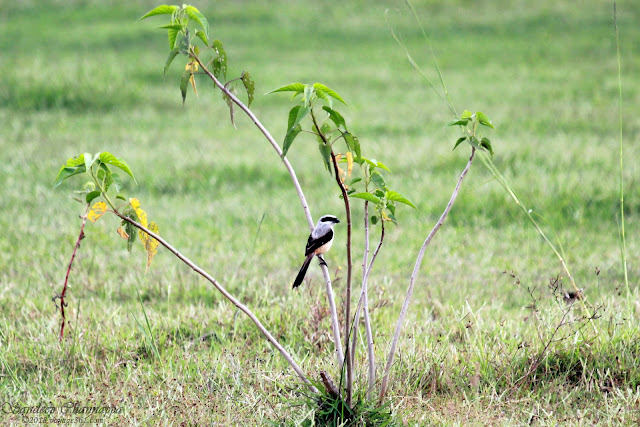
Bay-backed Shrike
Bay-backed Shrike
Paddyfield Pipit foraging on the beautiful landscapes of Hesaraghatta lake grasslands
Silverbills were spotted with a lovely backdrop of the lake

The whole area was mostly secluded and felt unsafe for solo visitors. The lake bed is also made restricted by the BWSSB authority, but human activity was still seen common, animal grazing, fishing and young couples seen busy with their activity at the lake bed.

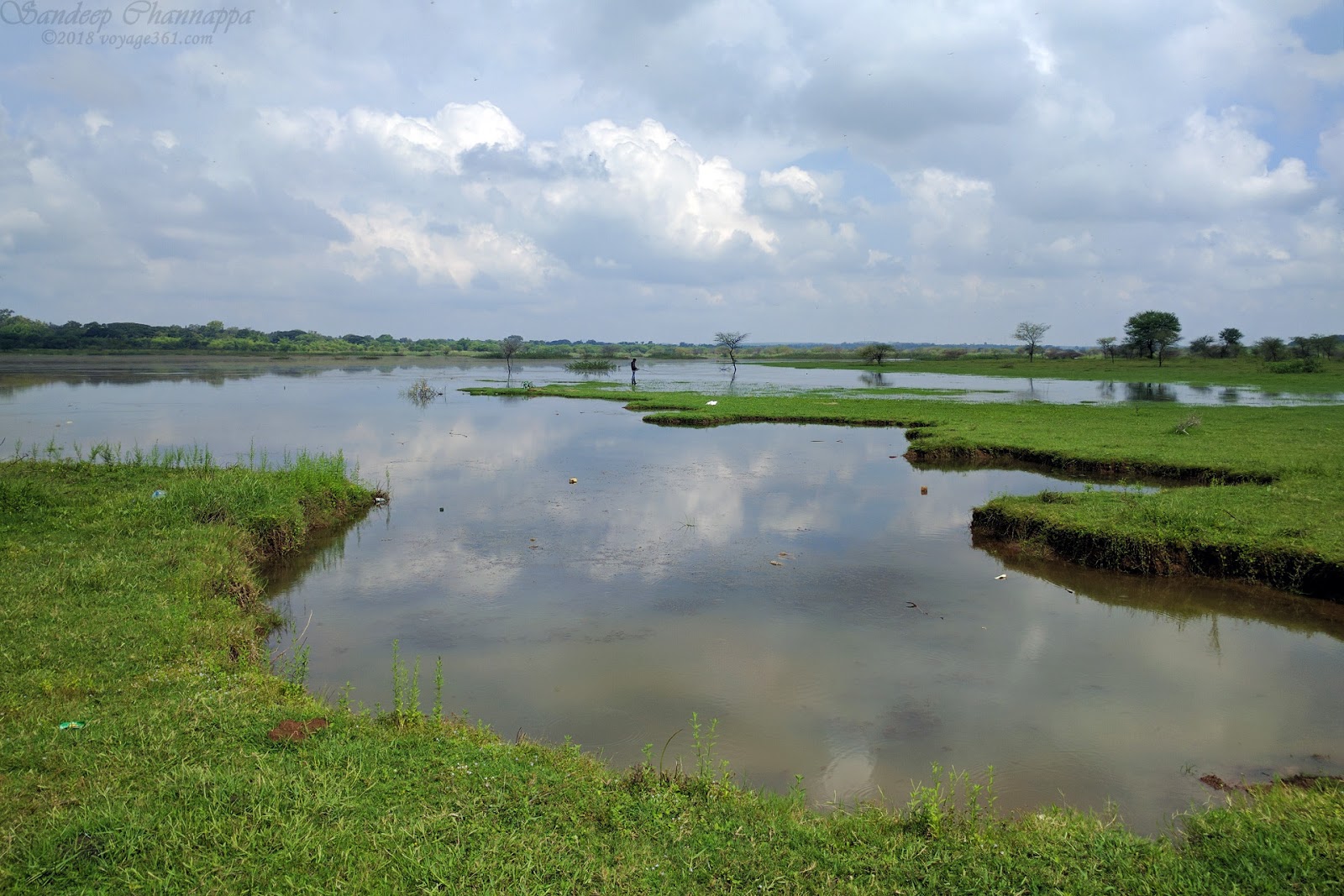
Apart from the bird watching, the lake itself is worth the visit due to the beautiful landscapes it has to offer.
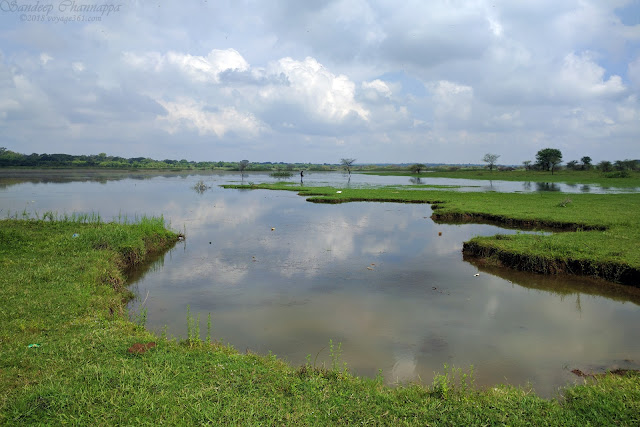
Hesaraghatta Lake
Hesaraghatta Lake

Complete checklist of birds at eBird:
https://ebird.org/india/view/checklist/S48859830

Comments

Popular posts from this blog

Sky Islands to the Pacific shores - Part 1: The Sky Islands of Southeastern Arizona

In August 2026, I crossed the Atlantic to chase a long-cherished dream, stepping into the vast, untamed birding horizons of the American Wild West. Across a sweeping route through Arizona, Texas, Utah, and California, I logged 108 total species -  the vast majority of them absolute lifers for me! While the landscapes were vast and the wildlife was extraordinary, what truly made the Arizona portion of the trip unforgettable was the incredible warmth of the local birding community. At almost every trail, feeding station, and wetland, I met welcoming, friendly locals who were quick to share site tips, point out hidden roosts, and make a first-time visitor feel right at home. While North America’s diverse habitats delivered endless surprises, it was Arizona's high-desert canyons, towering rims, and lush riparian corridors that anchored the trip. Here is a location-by-location breakdown of the top birding hotspots, standout avian highlights, and unexpected wildlife encounters from the A...

Sky Islands to the Pacific Shores – Part 2: Desert Valleys, Urban Wetlands & The Grand Canyon

If you missed Part 1: The Sky Islands of Southeastern Arizona , we explored the cool, high-elevation pine-oak Canyons of Madera, Montosa, Ramsey, Ash, and Carr, tracking hummingbird diversity and vibrant montane species across the legendary Sky Island ranges. Leaving the high, pine-scented peaks of the Sky Islands behind, the journey transitions into the sprawling lowlands and desert basins of Arizona. This second leg follows a dramatic ecological gradient—from open desert waters and lush suburban wetland oases into the iconic giant Saguaro forests of the Sonoran Desert, before ascending the Colorado Plateau to the high-elevation pine rims of the Grand Canyon. 3. Canoa Ranch Conservation Park Nestled in the Santa Cruz River Valley, Historic Canoa Ranch combines rich Southwestern heritage with wide-open water and vast desert horizons. Spending the late afternoon here delivered a bustling wildlife spectacle right up until dusk. Active hunters like the Belted Kingfisher, Black Phoebe, Ver...

Seabird photography adventure on the Isle of May

Seabird Photography Adventure on the Isle of May – July 2025 Tucked off the east coast of Scotland, the Isle of May National Nature Reserve is a dream for wildlife and photography enthusiasts alike - especially during seabird breeding season. My trip in early July 2025 turned out to be more thrilling and rewarding than I had imagined, thanks to an unexpected boat change, incredible wildlife encounters, and a few lucky early moments of solitude with the stars of the island— the Puffins . A puffin staring right at the lens, proud of its catch. Getting There: A Wild Ride on the North Sea Originally, I had booked a standard boat tour with BlueWild from Dunbar harbour, but due to a last-minute issue with the vessel the night before, our journey was downgraded - well, depending on how you look at it - to a RIB (Rigid Inflatable Boat) . What followed was a wild, wind-whipped ride across the North Sea , bouncing over waves with little warning. Thankfully, our guide kindly offered me a spar...

Birding in the Netherlands

The Netherlands has a coastline of over 451 km, wide open to the north sea. Much of its land has been reclaimed from the sea and is below sea level, not surprisingly its coastal wetlands make up some of the best birding hotspots, apart from the inland nature reserves. Close to 500 bird species are recorded in the country, much of them are waders and water birds due to its geography. As a non-resident birdwatcher it was not an easy task to locate the right bird watching spots, whilst ebird helped considerably, the rest was on me to explore the Dutch lands. Nevertheless, the country is much safer to explore and the good facilities such as birding hides at the right places, easy access to most reserves makes it a birder friendly country. I have explored two of the birding hotspots, the Texel Island and Oostvaardersplassen nature reserve. Apart from these, I found bird watching and bird photography can be interesting in the neighborhood city parks and also tourist places such as Zaans...

Chennakeshava temple of Belur- Exteriors

Chennakeshava temple of Belur: Some facts about the Chennakeshava Temple: Hoysala king Vishnuvardhana defeated the Cholas at Talakad & to commemorate this great event built many temples in 1117 A.D., of which Chennakeshava temple at Belur is the most important & beautiful , dedicated to Keshava one of the 24 forms of Vishnu. Although the temple was completed by Narasimha, it took over 103 years to finish the structure. Though the legends assign this temple to have been built by Jakanachari, as per the inscriptions the master builders of this temple are Dasoja and his son Chavana, other sculptors include Chikka-Hampa, Malliyana, Padari Malloja, Masada and Nagoja who bestowed their best in creating this masterpiece. Chennakeshava Temple, Belur Back to the travelogue: Most important aspect of these Belur Halebeedu temples is that Chennakeshava temple is famous for beautiful and intricate interiors and Hoysaleshwara temple is famous for the magnificent sculpture...