Dandeli : Land of the Hornbills
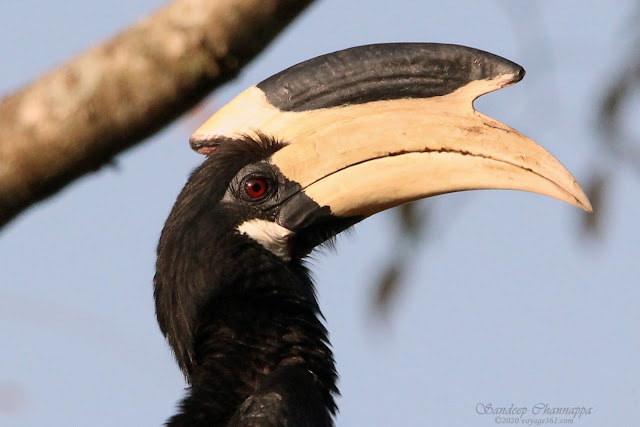 |
| Malabar pied hornbill is a large bird about 26inch long, listed as near threatened species (IUCN 3.1 Red List). Its interesting feature is its large yellow bill with mainly black casque |
Dandeli is a land of the hornbills and a heaven for bird watchers. This rather popular Tiger reserve is located in the western ghats of Uttara Kannada district. Hornbills here are densely populated and are found in four varieties, including the IUCN Red List vulnerable species Indian Great Hornbill and IUCN Red List near threatened species Malabar Pied Hornbill, the other two are the Malabar Gray Hornbill and Indian Gray Hornbill.
Although Dandeli is famous for the Hornbills, but for bird watchers there is much more awaiting. More than two hundred and fifty species of birds are recorded in this region, most of them are a rare sight in urban India. I spotted more than hundred recognizable species of birds during my two visits. It is surely a must visit place for every bird enthusiast.
There are many birding hotspots in and around Dandeli, popular ones include the Timber depot, Ganeshgudi, Kaiga, Kulgi and the Dandeli Wildlife Sanctuary.
Apart from the hornbills, Dandeli is home to some of the rarest bird species and I was lucky enough to spot many of those including the Malabar Trogan, Heart-spotted Woodpecker, Brown-capped Woodpecker, Greater Flameback, Black-rumped Flameback, Black-naped Monarch, Asian Emerald Dove, Gray-fronted Green-Pigeon, Yellow-footed Green-Pigeon, Green Imperial-Pigeon, Black Eagle, Crested Serpent-Eagle, Plum-headed Parakeet, Malabar Parakeet, Vernal Hanging-Parrot, Indian Roller, Indian Yellow Tit, Brown-cheeked Fulvetta, Jerdon's Leafbird, Golden-fronted Leafbird, Black-throated Munia, Black-hooded Oriole, Brown-headed Barbet, Indian Blue Robin, Red Spurfowl & Gray Junglefowl.
A wide variety of flycatchers were also sighted, the Tickell's Blue Flycatcher, White-bellied Blue Flycatcher, Verditer Flycatcher, Red-breasted Flycatcher, Bar-winged Flycatcher-shrike, Taiga Flycatcher, Brown-breasted Flycatcher & the gorgeous Indian Paradise-Flycatcher.
Five out of six species of Drongos found in Karnataka were spotted in Dandeli, Greater Racket-tailed Drongo, Hair-crested Drongo, Bronzed Drongo, Black Drongo and Ashy Drongo.
Apart from the birds, there were other sightings of wildlife including the Malabar giant squirrel, Bonnet macaque, Gray langur, Indian flying lizard & viper snake.
After returning from one of the solo birding walk in Ganeshgudi, I was informed that there was a Leopard spotted crossing the trail a day before, at the same time of the day, which scared the hell out of me! Adding to this, the following day we were told, there was a sloth bear spotted by the resort staff crossing the birding trails. It is highly advised not to venture in the area around Ganeshgudi alone and on foot, always accompany the forest officials.
Here I present to you some of the highlights of the trip:
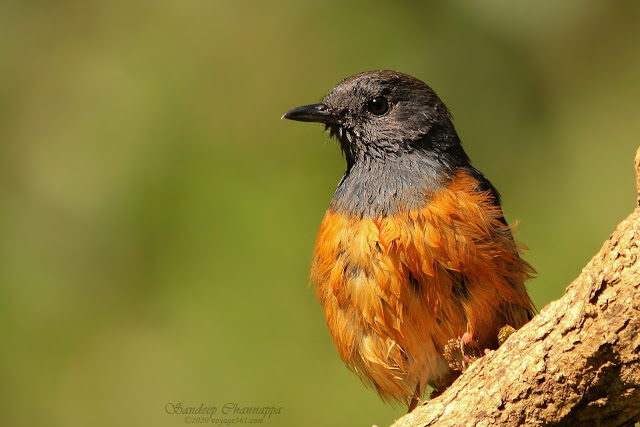 |
| White-rumped Shama, a native song bird of Indian subcontinent and Southeast Asia. Listening to their melodies is a delight for the ears |
 |
| Orange Minivet(Male) - resident bird found only in western ghats of India and Srilanka. Male has orange underparts and patch on tertials where as female is yellow. |
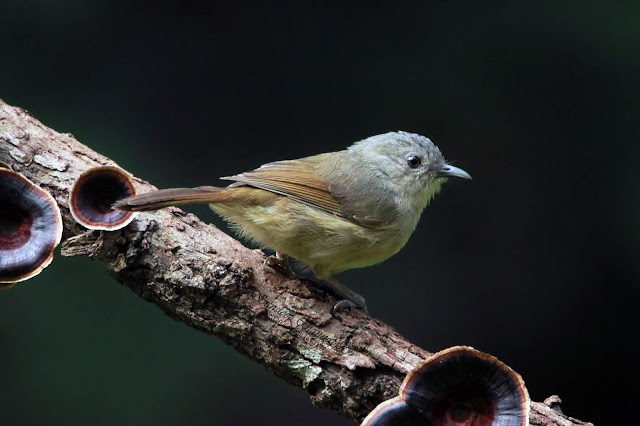 |
| Brown-cheeked fulvetta is a resident bird in India, Bangladesh and Southeast Asia. |
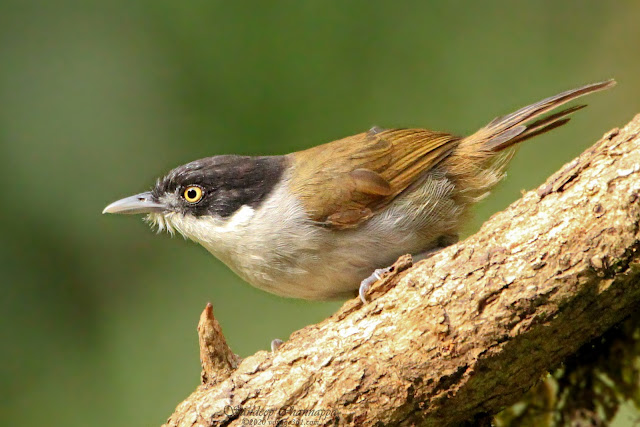 |
| Dark-fronted babbler are a native resident birds found only in the Western Ghats of India and the forests of Sri Lanka. Like other babblers, these are noisy birds. |
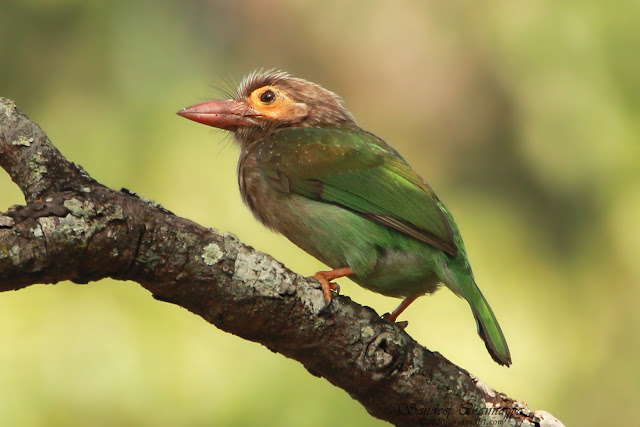 |
| The Frugivorous Brown-headed barbet. They are native to the Indian subcontinent, where it inhabits tropical & subtropical moist broadleaf forests. |
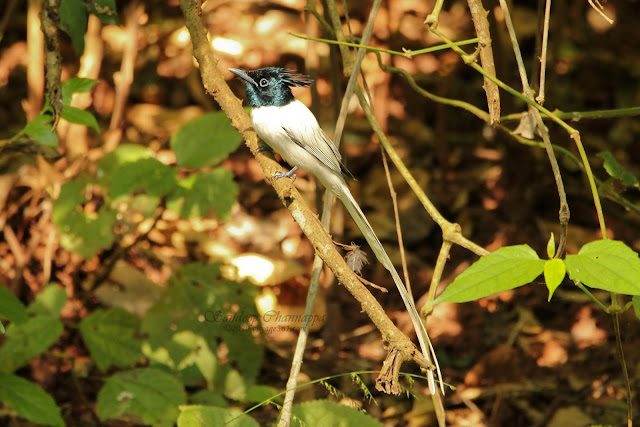 |
| A native resident of Indian subcontinent, Indian Paradise-Flycatcher's have unique feathers for adult male. These indianeyecatchers come in two different plumage, Rufous and White, with its two central tail feathers growing upto a foot long. |
 |
| Female Indian Paradise-Flycatcher |
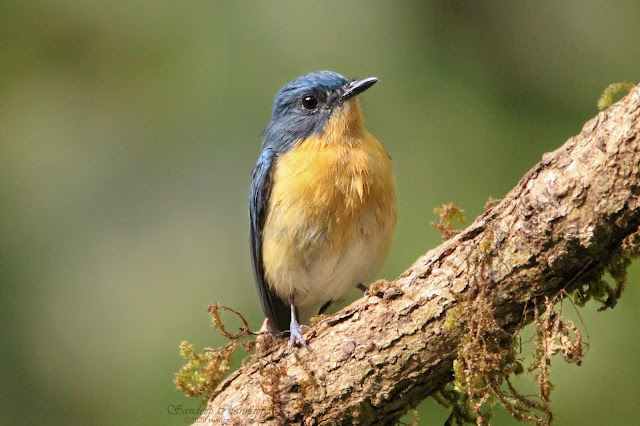 |
| Tickell's Blue flycatcher - they are a treat for not only your eyes, but also ears when they sing their metallic notes. |
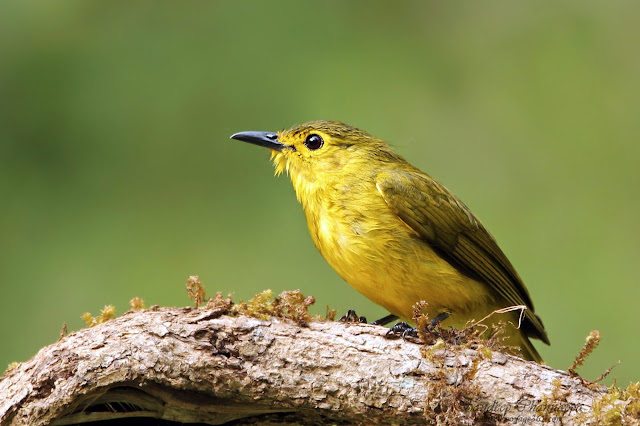 |
| Yellow browed Bulbul, they are found mainly below the forest canopy of the hill forests and plantations in the Western Ghats of India and Sri Lanka. |
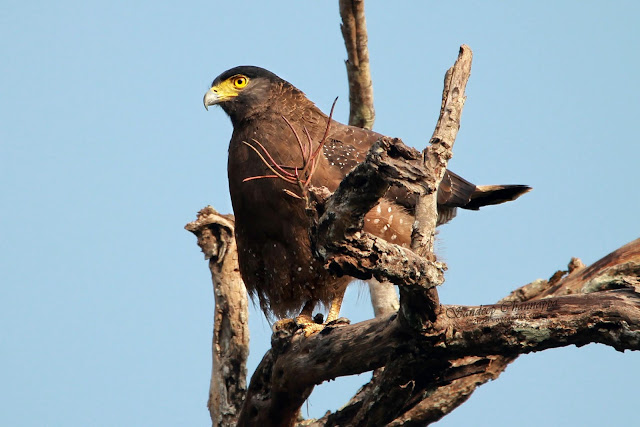 |
| Crested serpent Eagle, this one was seen perched high over a dead tree. They are found in the forested habitats across tropical asia. As their name suggests, they feed on reptiles, primarily on snakes, lizards and birds. |
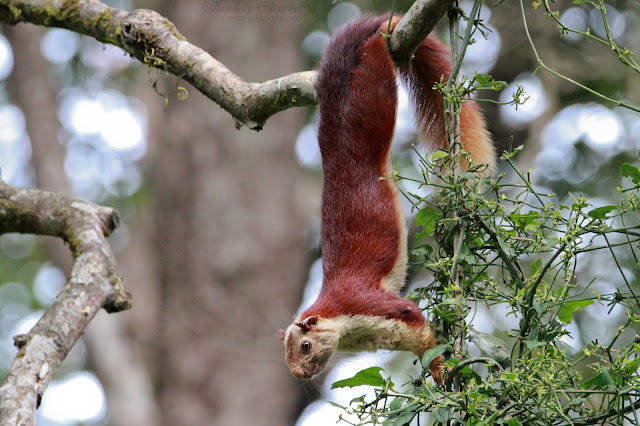 |
| The pretty but massive, maroon-colored Malabar giant squirrel or Indian giant squirrel, endemic to India. They have a stunning appearance with a head to tail length of upto 3 feet and are among the largest tree-dwelling Squirrel in the world. Its fluffy fur and the vibrant shades of tan, brown, or maroon is what it calls for so much of attention. |
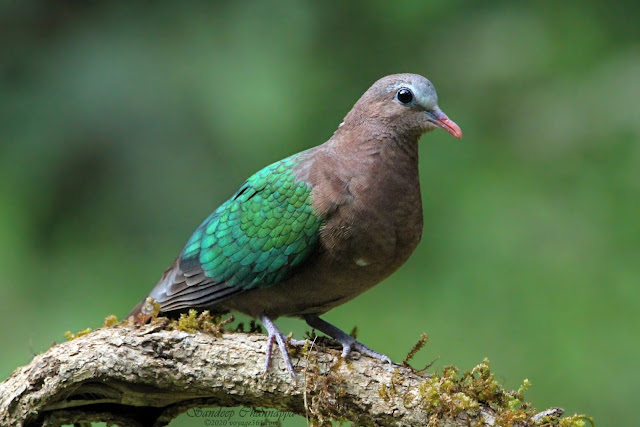 |
| Asian Emerald Dove |
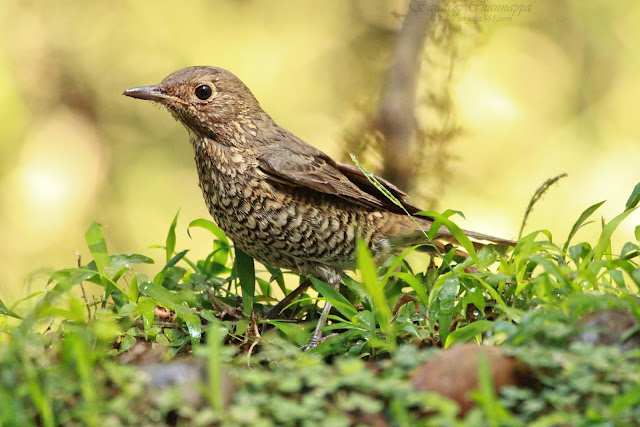 |
| Blue-capped Rock-Thrush Female |
 |
| Blue-capped Rock-Thrush Male - Composition plays a vital role in photography, getting a nice background enhances the subject. In this image, I positioned myself to get a clear background and to face the head and back of the bird. |
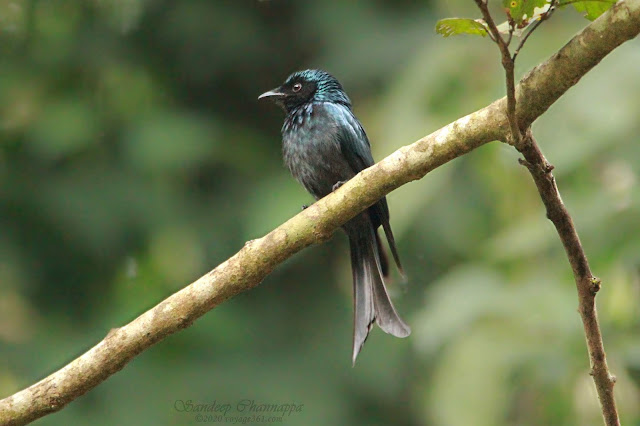 |
| Bronzed drongo - a resident bird endemic to NE India, Western and Eastern ghats of India, Bangladesh and Himalayan foothills. Their interesting feature is its strongly glossed metallic blue-green plumage. |
 |
| Cute little Crimson-backed sunbird, its just 8cm long and only found in the Western Ghats of India. The bright metallic plumage is what it makes them look exceptional. |
 |
| The tiny cutie Indian White-eye |
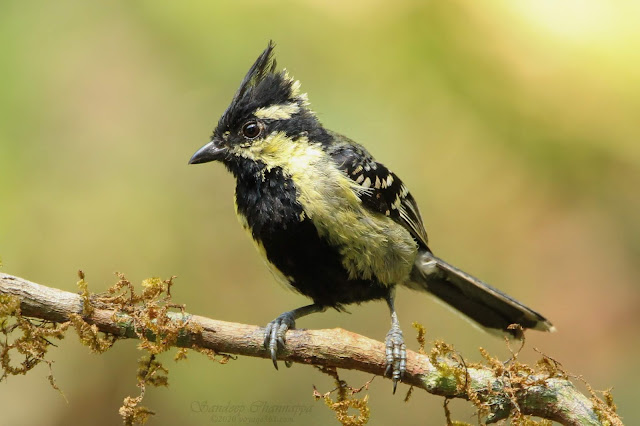 |
| Indian yellow tit - its long crest is its most interesting feature. They are a resident bird of peninsular hills of India. |
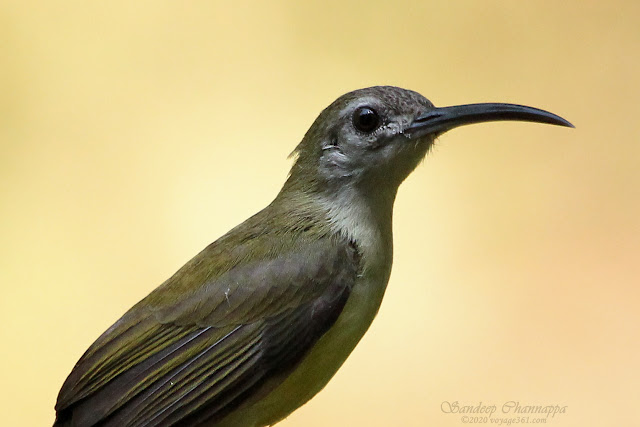 |
| SpiderHunter - They have a long bill, which is twice the length of their head. |
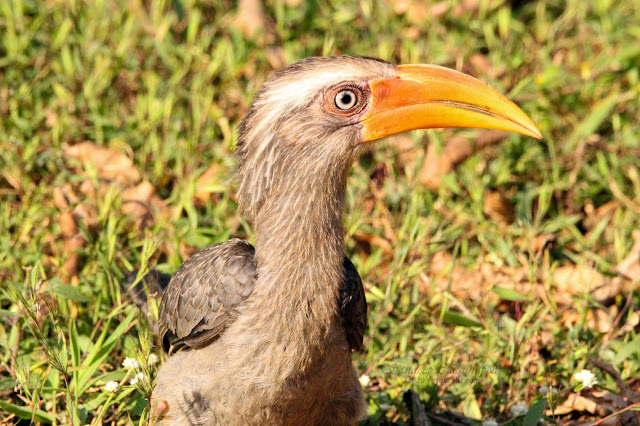 |
| A rather rare sight of Malabar grey Hornbill foraging on the ground. They are usually seen perched on tall trees. They are found only in the western ghats of India. |
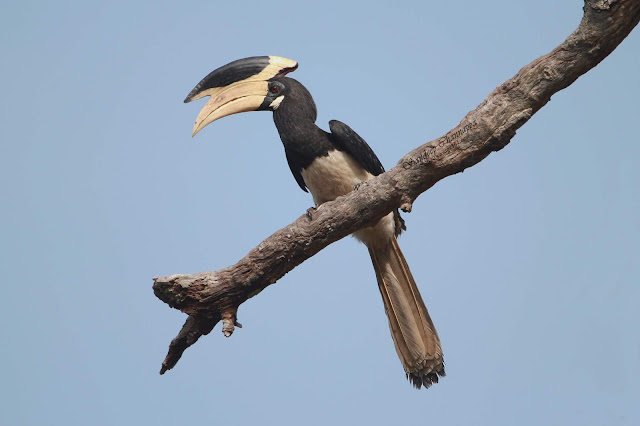 |
| Malabar pied hornbill is a large bird about 26inch long, listed as near threatened species (IUCN 3.1 Red List). Its interesting feature is its large yellow bill with mainly black casque. They are a rare to find, only found in the Western ghats, east India, and Srilanka. |
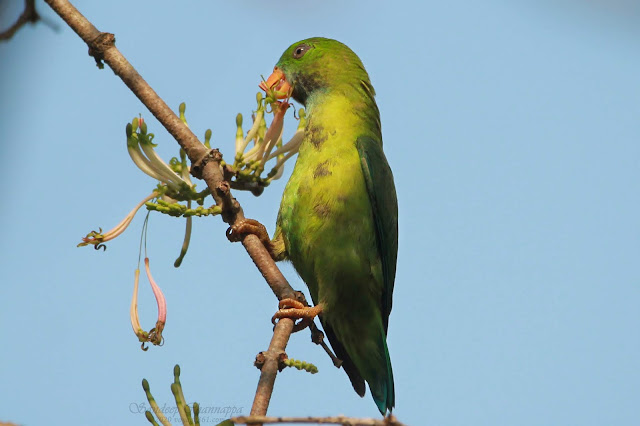 |
| Smallest parrot found in India - The Vernal hanging parrot. They are resident birds mainly found in the North east, Western ghats and eastern ghats of India, along with Bangladesh. |
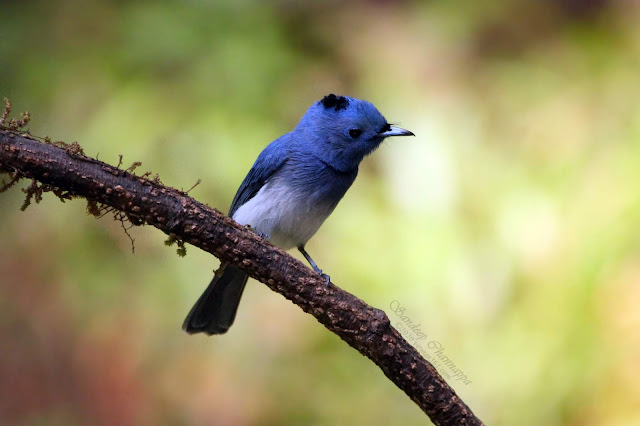 |
| Black-naped monarch, a flycatcher found in southern & south-eastern Asia. Male is completely azure blue with a black nape patch & female is duller with olive brown wings & lacking the black markings on the head. |


Comments
Post a Comment