Birds in my Backyard:
 |
| Cinereous Tit, often seen on the trees in gardens and forests, always in a hurry |
It is not always required to go on for a birding trip to spot new and exotic bird species, sometimes they visit your backyard too. But only if you pay attention to their calls and observe their silent movements across the branches. By doing this I was able to spot more than 20 species of birds just from my windows in Bengaluru.
Rose-ringed Parakeet:
They are widely found in and around Bengaluru. They have a blend of green and yellow feathers, with traces of blue over the tail. Adult males have black and rose ring around its neck, hence its name. While the Female and juveniles have none or a slight shadow where the neck ring should be.
They usually nest in tree holes either naturally occurring or made by other birds like woodpeckers or barbets or sometimes made by themselves.
 |
| Rose-ringed Parakeet - Male, with its distinctive black and rose ring around its neck |
 |
| A female rose-ringed parakeet |
Cinereous tit:
Cinereous tit (Parus cinereus) are a small passerine bird about 13 cm long. They are grey backed with a white wing-bar along with white undersides and white cheek patch . It has a black hood and a black underside central stripe running along the length.
They usually nest in the tree holes similar to that of Parakeets, and also in hollows of a wall or mud-bank with a narrow entrance hole.
 |
| Cinereous Tit, seen inspecting the abandoned tree hole made by Barbet |
White-cheeked Barbet:
It is a small but aggressive bird about 16-18 cm in length, mostly seen in the south India and commonly seen in Bengaluru. They have a distinctive supercilium and a broad white cheek stripe below the eye, which makes it easily identifiable. Their distinctive monotonous loud calls can be heard from far.
Like bulbuls they are often seen on calabura tree to feed on ornamental cherry.
 |
| White-cheeked barbet |
Barbets are primarily cavity nesters, chiseling out the trunk or a vertical branch of tree with a round entry hole. It can take about 20 days to complete the nest.
These nest holes are usually made in dead branches. They are sometimes occupied by Mynas or Parakeets.
 |
| White-cheeked barbet in its tree hole nest |
Spotted Dove:
They are also called as lace-necked dove or spotted turtle-dove due to their white-spotted black collar patch on the back and sides of the neck. They have a buff brown long tail and light buff spots on its wing coverts.
 |
| Spotted dove with their distinctive white-spotted black collar patch |
Their nest is usually made of loose platform of twigs, which may be placed in low vegetation and sometimes on the ground or on buildings and other structures.
 |
| Spotted dove, mostly seen perched on the branches of the trees |
Common Hawk Cuckoo:
Its resemblance to hawks gives its name as hawk-cuckoo. They have a ashy gray plumage above; undersides are whitish and cross-barred with brown, while the Sub-adults have the breast streaked. The tail is also broadly barred. They have a distinctive yellow eye ring. It bears a close resemblance with Shikra, but easily identifiable with its distinctive straight beak, unlike the hooked hawk's beak.
They are arboreal, so mostly seen over the trees and rarely descends to the ground.
They are brood parasites, which means they rely on other birds to raise their young by laying their eggs in nests of other birds, generally babblers.
 |
| Common Hawk-Cuckoo |
Asian Koel:
It is a large cuckoo measuring about 39-46cm. The sexes are easily distinguishable, the male is glossy bluish-black with a pale greenish-gray bill, gray legs and feet. Whereas the female has dark brown back, rump and coverts with white and buff spots; while the underparts are whitish with heavily striped; the crown is brownish with rufous streaks on its head.
The male Asian Koel can be distinguishable with a crow, by its crimson iris and pale greenish-gray bill.
Similar to Cuckoo's, the Asian koel is also a brood parasite, they lay their eggs in the nests of crows and other hosts, who raise their young. The female Koel often visits the host nest but alone.
 |
| A male Asian Koel |
Purple Sunbird:
Purple sunbirds are tiny nectar-feeding birds, with length measuring only about 10cm.
While the sunbirds are resident birds found in Asia, they share many similarities with the New World ("Americas") hummingbirds, as they are also able to hover in front of flowers to retrieve nectar.
They are usually seen in pairs or small (family) groups, except at favored feeding sites where up to 40 to 50 of them can be found.
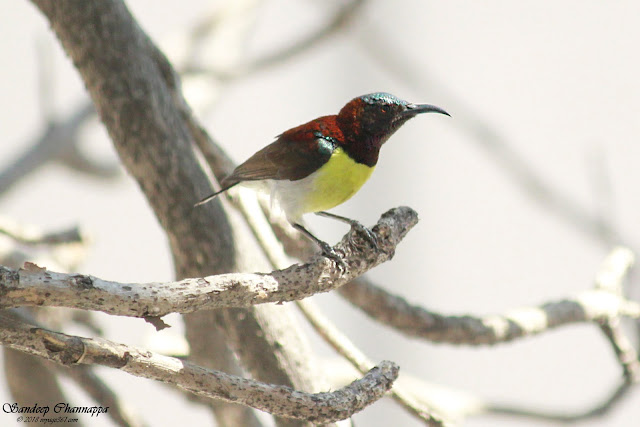 |
| Purple rumped Sunbird (Male) |
 |
| Purple Sunbird (Male) |
Black Kite:
This bird of prey are one of the most abundant species of raptor in the world. Though abundant in South Asia, they are distributed through Eurasia and parts of Australasia and Oceania. They are mid-sized measuring about 51cm and preys on lizards, small mammals and insects, especially grasshoppers.
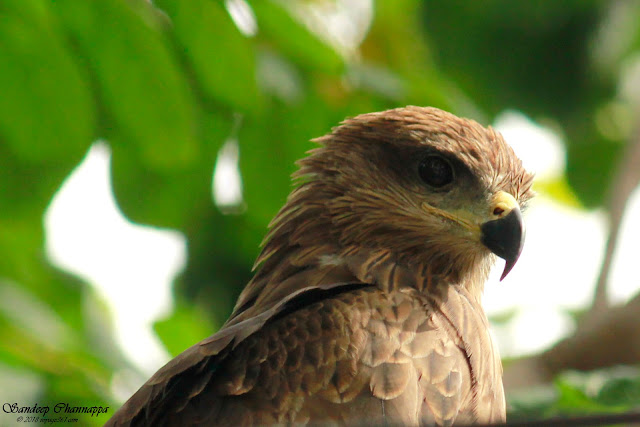 |
| Black Kite up close |
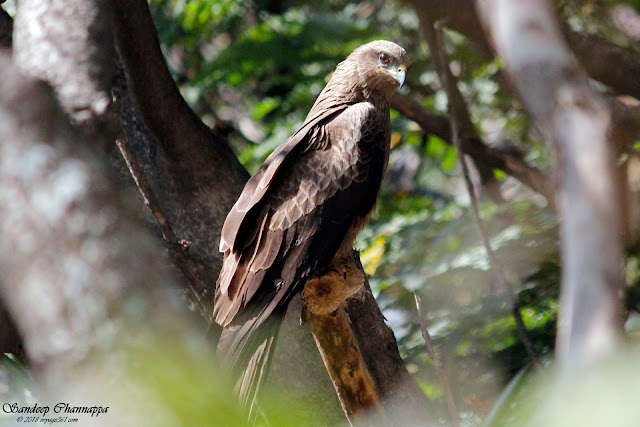 |
| Black Kite |
Brahminy Kite:
These mid-sized(45-51cm) birds of prey are widespread across the tropical Asia. The adults are easily distinguishable from other raptors for their reddish-brown body plumage with contrasting white head and breast
Brahminy kites just eat everything, they feed on both dead and living. They are scavengers who feed on dead animals such as fish and crabs, and also prey on living such as hares, bats, small birds, frogs, snakes, small reptiles, fish and insects.
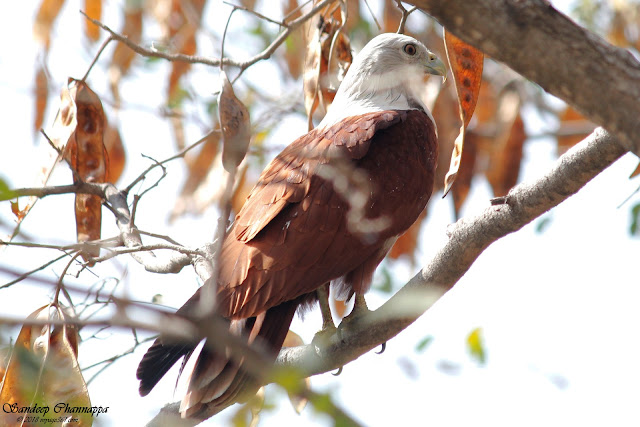 |
| Brahminy Kite |
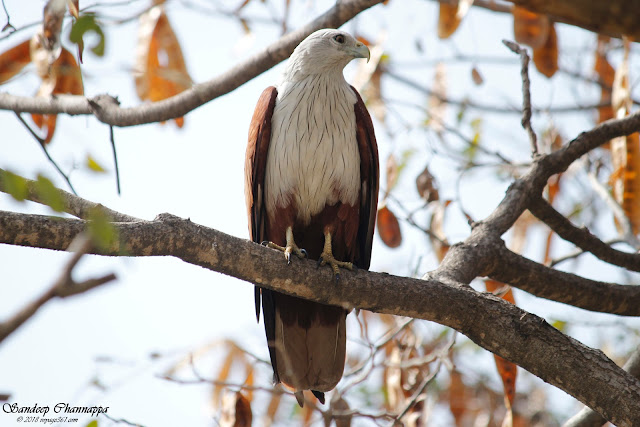 |
| Brahminy Kite |


Comments
Post a Comment