Bikaner old city walk & auto ride

Bikaner is famous for its palaces and forts, built of red sandstone, and is the fourth largest city of Rajasthan state. We had made a hard choice to select Bikaner over Pushkar/Ajmer in our itinerary, but only realised it was more than worth it after we explored the city.
The city is dominated by auto rickshaws for public transportation, may be due to its narrow streets. There are many attractions in Bikaner and choices of excursions, but we limited our itinerary to a few popular ones.
Rampuria group of Havelis
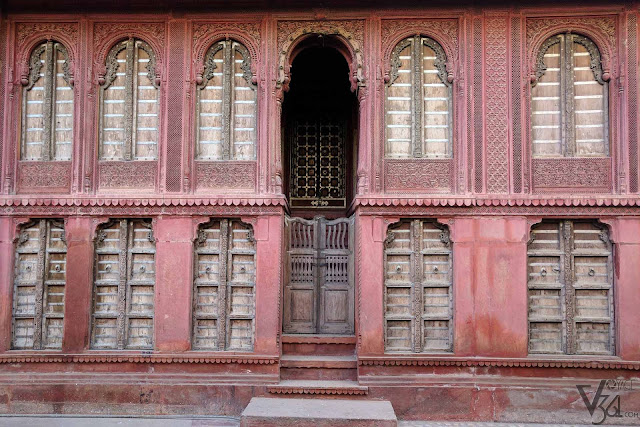
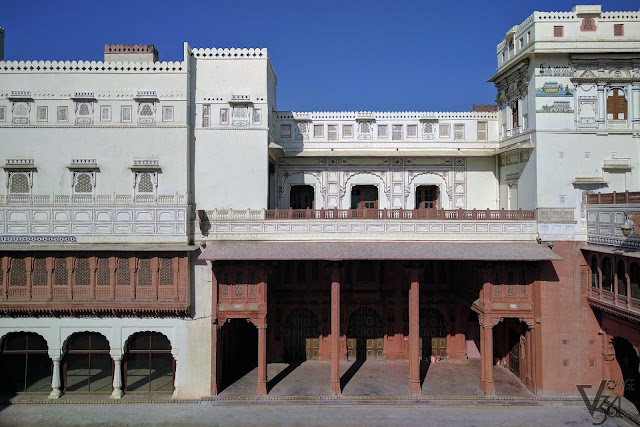
We started exploring the city of Bikaner through the Rampuria group of Havelis, these havelis are created by Baluji Chalva built with dulmera red sandstone with highly ornate windows. These havelis are few of the last remaining and finest examples of Bikaner style of architecture, which is a perfect fusion of Rajasthani and British architectural styles.
Rampuria group of Havelis
Bikaner style of architecture, Heritage street
Junagarh fort and palace, & Prachina Museum:
Junagarh fort or Chintamani fort was constructed in the 16th century and is very well maintained. Unlike the other forts in Rajasthan, which are built on hillock, Junagarh fort is standing on the ground level. The fortress covers a small area but has a strong and tall fortification, with a beautiful palace inside it.
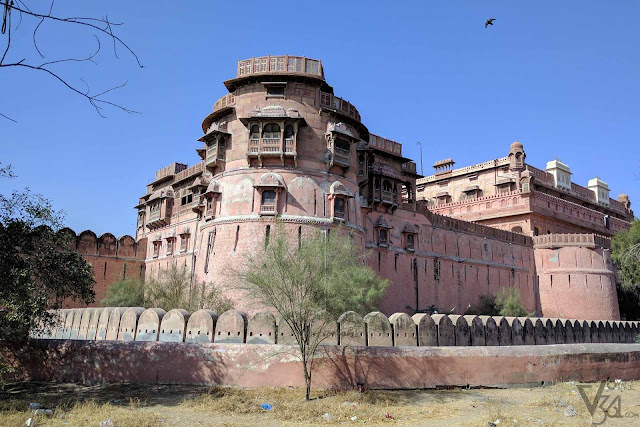
Junagarh fort
Junagarh fort
The entry ticket also includes the guide charges and tourists are not allowed to roam inside the palace at will, and only traveled along with the guide, which we felt was very organised.

The palace has many rooms, halls and courtyards, the guided tour takes you through the
Karan Mahal courtyard and then to the Public Audience Hall, the Karan Mahal built in the 17th century.
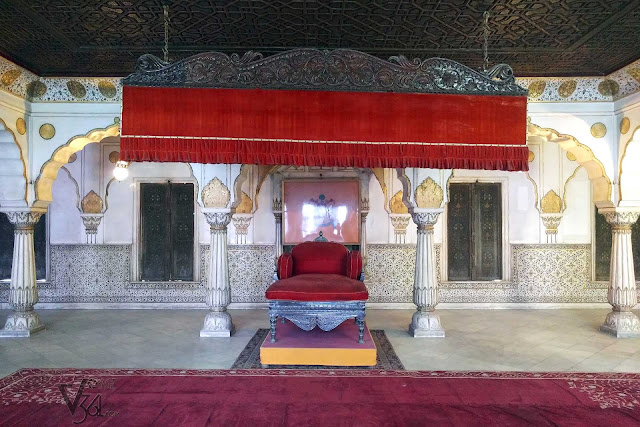
Karan Mahal
Karan Mahal
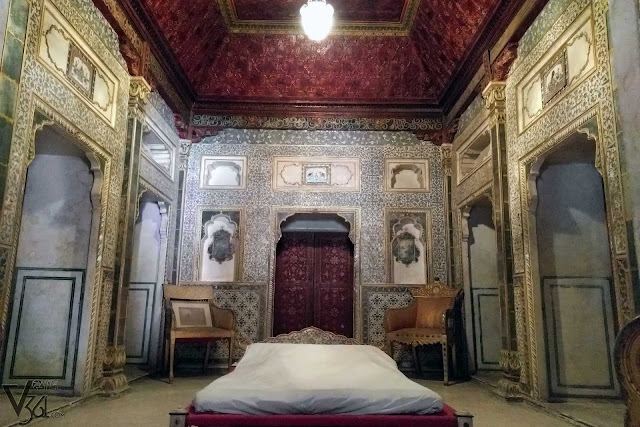
Further through the courtyard of Anup Mahal we reached the Private council room, the Anup Mahal, which is the most beautiful monument of the Junagarh palace, with the gold vermilion varnished work on its walls and arches. The center of the Anup Mahal features the throne of the ruler.
Anup Mahal
Anup Mahal 
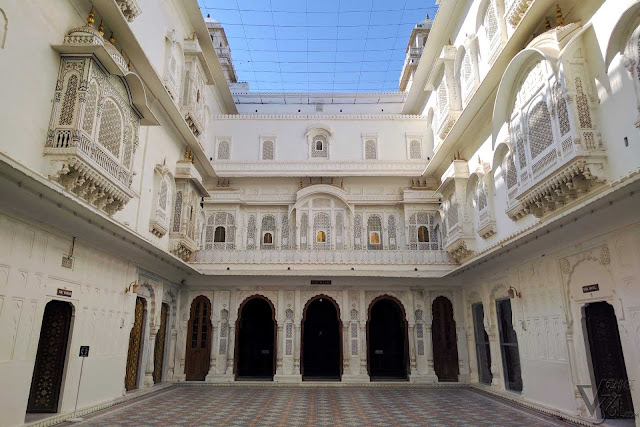
Anup Mahal courtyard, which connects Anup Mahal to Rai Niwas and Badal Mahal
Anup Mahal courtyard, which connects Anup Mahal, Rai Niwas and Badal Mahal
Badal Mahal or “Cloud Palace” also opens up into the Anup Mahal courtyard, and is painted with blue cloud motifs.
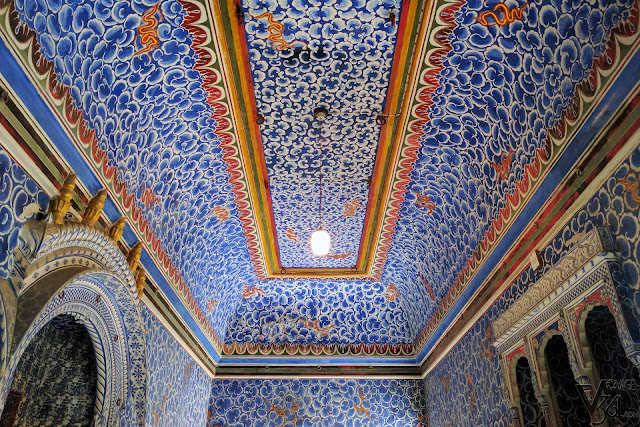
Badal Mahal
Badal Mahal
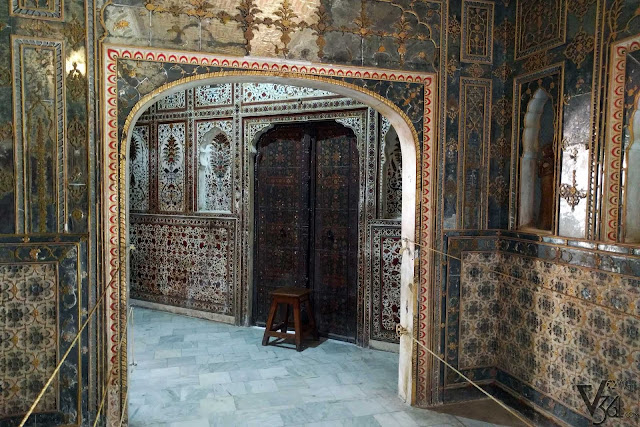
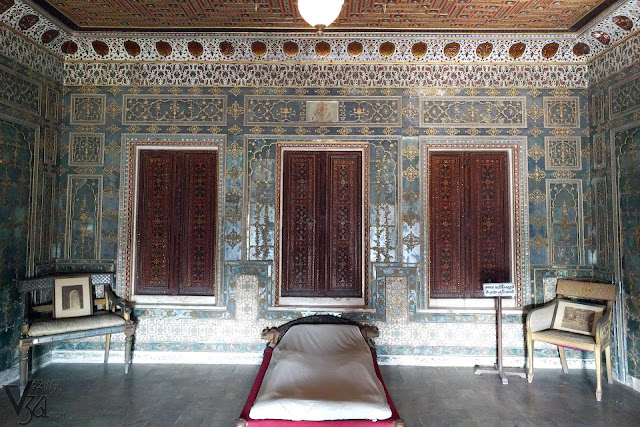
Next came the Gaj Mandir, which was the private suite of Maharaja Gaj Singh and his two wives. The walls and roof are richly designed with gold paint, colourful murals, stained glass windows, doorways with work of sandalwood and ivory, and mirror cladded walls. Similar to Mehrangarh Palace, the Gaj Mandir Sheesh Mahal was where the King used to sleep.
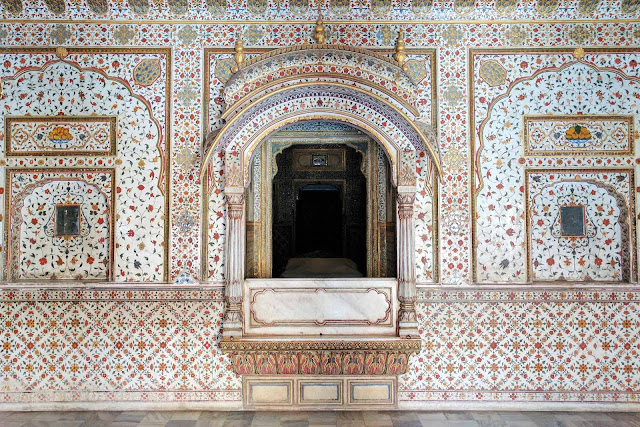
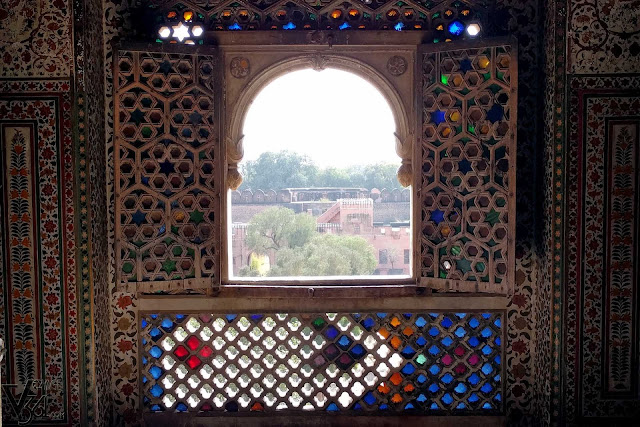
Queens chamber through the window, Gaj Mandir
Queens chamber, Gaj Mandir
Corridor which leads to Kings chamber, Gaj Mandir
Stained glass windows, Gaj Mandir
Gaj Mandir Sheesh Mahal (Room of Mirrors)
Junagarh Palace
Junagarh Palace
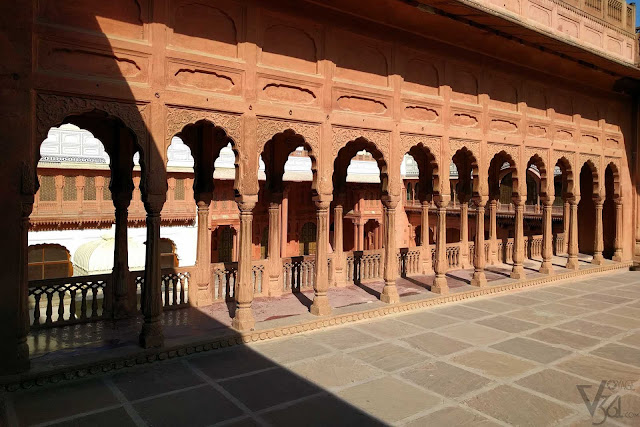
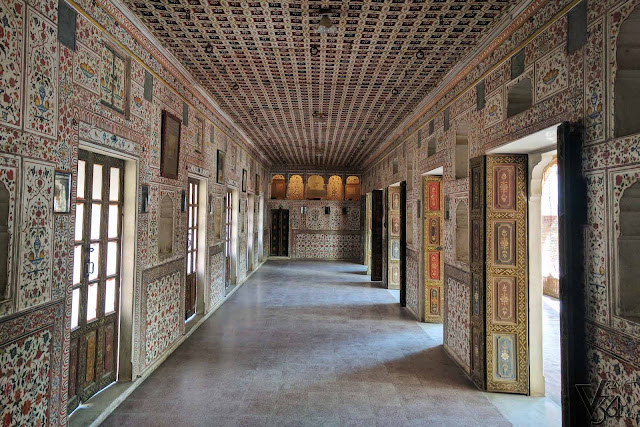
Beautiful corridors built from Red sandstone
Beautiful Red sandstone corridors inside the Junagarh palace
Dungar Niwas
Dungar Niwas
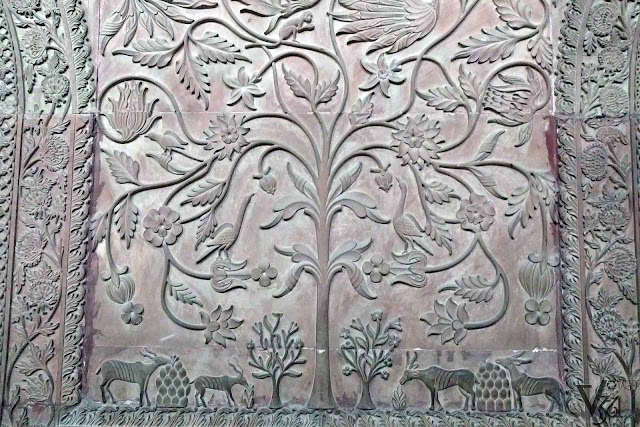
After crossing the Dungar Niwas we entered the massive Ganga Durbar Hall, with its pink stone walls covered in fascinating relief carvings. The durbar hall is one of the main highlight of the palace.
Ganga Durbar Hall
Ganga Durbar Hall
Relief carvings which makes up the walls of the Ganga Durbar Hall
Relief carvings which makes up the interior walls of the Ganga Durbar Hall
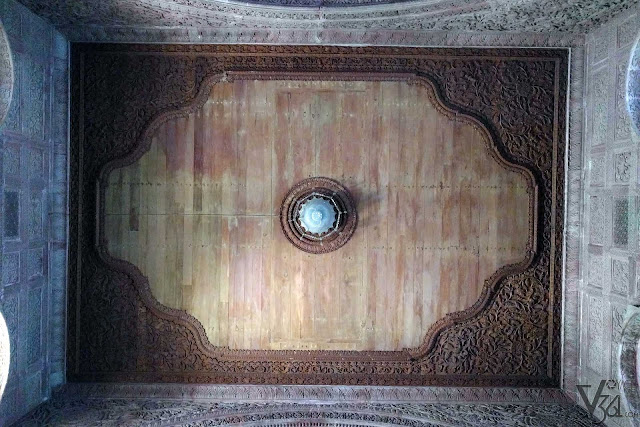
The grand wooden ceilings of the Ganga Durbar Hall
The last monument of the guided tour was the Vikram Vilas Durbar Hall, named after great  King Vikramaditya. Collection of war souvenirs, elephant howdah and throne can be seen here, including the WWI bomber aircraft.
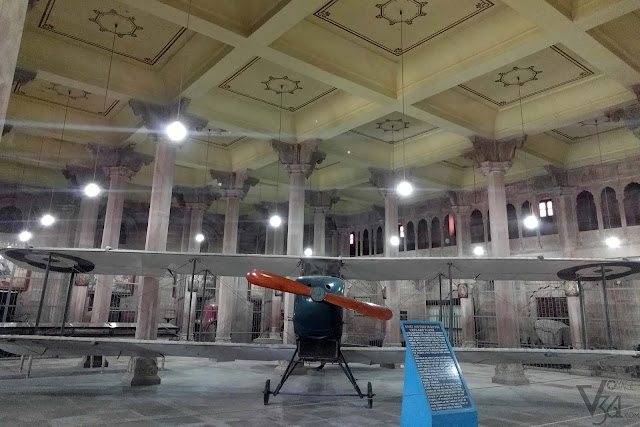
Vikram Vilas Durbar Hall
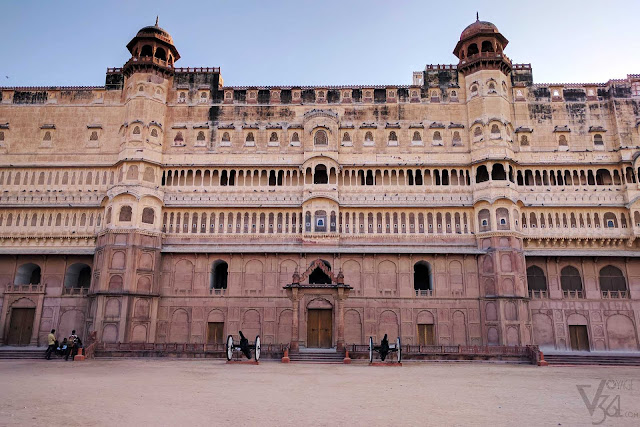
Junagarh Palace facade
The Prachina Museum built in front of the Palace, was worth the visit with displays of various Rajasthani royal dresses and the artifacts of the royal family.
Prachina Museum
Prachina Museum
We had our lunch at the Prachina Cafe and took an auto for rental for Lalgarh Palace and back to railway station road.
Lalgarh Palace and Laxmi Niwas Palace were built in the year 1902, entirely of red sandstone and was commissioned by Maharaja Ganga Singh.
This structure displays a fusion of Rajputana, Mughal and European architectures. There is also a small museum built in front of the Palace, which we thought will be an overdose of royal family artifacts after visiting so many museums, and we gave it a miss.
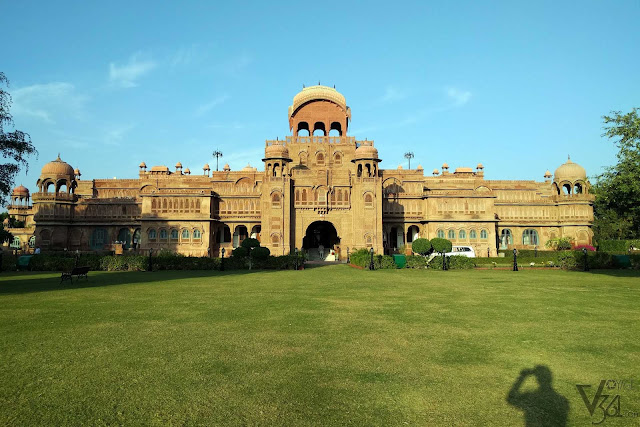
The main facade of the Laxmi Niwas Palace
The main facade of the Laxmi Niwas Palace 
The Palace is segmented into Laxmi Niwas Palace hotel and a royal residence where the Bikaner royal family still lives.
Lalgarh Palace
There are many other tourist attractions in Bikaner including the National Research Centre on Camel, the famous Karni Mata Temple at Deshnok, and the sand dunes of the thar desert.

How to reach:
Nearest civil Airport: Jodhpur, Jaipur
Railway: There are two stations Bikaner city railway station and the Lalgarh railway station. Bikaner has direct trains from Jaisalmer, Jodhpur and Jaipur.
Bus: RSRTC buses are available from all the major cities in Rajasthan and tickets can be booked online as well.

Comments

  1. GREAT PHOTO BLOG SIR I HAVE ENJOYED MOST LIKE YOUR PHOTOS THAT YOU HAVE POST IN YOUR BLOG KEEP POSTING. ACTUALLY I AM PLANING TO GO FOR LEH LADAKH DID YOU HAVE ANY LEH LADAKH HOLIDAY PACKAGES PHOTOS .???

    ReplyDelete

Post a Comment

Popular posts from this blog

Sky Islands to the Pacific shores - Part 1: The Sky Islands of Southeastern Arizona

In August 2026, I crossed the Atlantic to chase a long-cherished dream, stepping into the vast, untamed birding horizons of the American Wild West. Across a sweeping route through Arizona, Texas, Utah, and California, I logged 108 total species -  the vast majority of them absolute lifers for me! While the landscapes were vast and the wildlife was extraordinary, what truly made the Arizona portion of the trip unforgettable was the incredible warmth of the local birding community. At almost every trail, feeding station, and wetland, I met welcoming, friendly locals who were quick to share site tips, point out hidden roosts, and make a first-time visitor feel right at home. While North America’s diverse habitats delivered endless surprises, it was Arizona's high-desert canyons, towering rims, and lush riparian corridors that anchored the trip. Here is a location-by-location breakdown of the top birding hotspots, standout avian highlights, and unexpected wildlife encounters from the A...

Sky Islands to the Pacific Shores – Part 2: Desert Valleys, Urban Wetlands & The Grand Canyon

If you missed Part 1: The Sky Islands of Southeastern Arizona , we explored the cool, high-elevation pine-oak Canyons of Madera, Montosa, Ramsey, Ash, and Carr, tracking hummingbird diversity and vibrant montane species across the legendary Sky Island ranges. Leaving the high, pine-scented peaks of the Sky Islands behind, the journey transitions into the sprawling lowlands and desert basins of Arizona. This second leg follows a dramatic ecological gradient—from open desert waters and lush suburban wetland oases into the iconic giant Saguaro forests of the Sonoran Desert, before ascending the Colorado Plateau to the high-elevation pine rims of the Grand Canyon. 3. Canoa Ranch Conservation Park Nestled in the Santa Cruz River Valley, Historic Canoa Ranch combines rich Southwestern heritage with wide-open water and vast desert horizons. Spending the late afternoon here delivered a bustling wildlife spectacle right up until dusk. Active hunters like the Belted Kingfisher, Black Phoebe, Ver...

Seabird photography adventure on the Isle of May

Seabird Photography Adventure on the Isle of May – July 2025 Tucked off the east coast of Scotland, the Isle of May National Nature Reserve is a dream for wildlife and photography enthusiasts alike - especially during seabird breeding season. My trip in early July 2025 turned out to be more thrilling and rewarding than I had imagined, thanks to an unexpected boat change, incredible wildlife encounters, and a few lucky early moments of solitude with the stars of the island— the Puffins . A puffin staring right at the lens, proud of its catch. Getting There: A Wild Ride on the North Sea Originally, I had booked a standard boat tour with BlueWild from Dunbar harbour, but due to a last-minute issue with the vessel the night before, our journey was downgraded - well, depending on how you look at it - to a RIB (Rigid Inflatable Boat) . What followed was a wild, wind-whipped ride across the North Sea , bouncing over waves with little warning. Thankfully, our guide kindly offered me a spar...

Birding in the Netherlands

The Netherlands has a coastline of over 451 km, wide open to the north sea. Much of its land has been reclaimed from the sea and is below sea level, not surprisingly its coastal wetlands make up some of the best birding hotspots, apart from the inland nature reserves. Close to 500 bird species are recorded in the country, much of them are waders and water birds due to its geography. As a non-resident birdwatcher it was not an easy task to locate the right bird watching spots, whilst ebird helped considerably, the rest was on me to explore the Dutch lands. Nevertheless, the country is much safer to explore and the good facilities such as birding hides at the right places, easy access to most reserves makes it a birder friendly country. I have explored two of the birding hotspots, the Texel Island and Oostvaardersplassen nature reserve. Apart from these, I found bird watching and bird photography can be interesting in the neighborhood city parks and also tourist places such as Zaans...

Chennakeshava temple of Belur- Exteriors

Chennakeshava temple of Belur: Some facts about the Chennakeshava Temple: Hoysala king Vishnuvardhana defeated the Cholas at Talakad & to commemorate this great event built many temples in 1117 A.D., of which Chennakeshava temple at Belur is the most important & beautiful , dedicated to Keshava one of the 24 forms of Vishnu. Although the temple was completed by Narasimha, it took over 103 years to finish the structure. Though the legends assign this temple to have been built by Jakanachari, as per the inscriptions the master builders of this temple are Dasoja and his son Chavana, other sculptors include Chikka-Hampa, Malliyana, Padari Malloja, Masada and Nagoja who bestowed their best in creating this masterpiece. Chennakeshava Temple, Belur Back to the travelogue: Most important aspect of these Belur Halebeedu temples is that Chennakeshava temple is famous for beautiful and intricate interiors and Hoysaleshwara temple is famous for the magnificent sculpture...