Wildlife encounters around Hampi
This UNESCO World Heritage site is also getting popular for the wildlife it has to offer, some of them are rare and threatened.
Have been to Hampi several times before to explore the heritage sites, but never knew the wildlife over there is so rich and valuable to protect.Due to the quirky terrain around Hampi, one can expect unique wildlife encounters, which are endemic to dry deciduous scrub and thorn forests. Bulk of them can be spotted in Ankasamudra Bird Sanctuary and Daroji Sloth Bear Sanctuary, which is Asia's first sloth bear Sanctuary.
The region is vast to explore and with not many days to spare had contacted the expert in the region Mr. Pompayya Malemath. He was graceful to host us for our stay in Kamalapur, usually his appointments are booked for months in advance.
Our prolonged bucket list had Painted Sandgrouse, Chestnut-bellied Sandgrouse, Painted Spurfowl, Jungle Bush-Quail, Barred Buttonquail, Buntings, Indian Eagle Owl, Brown Fish-Owl, Yellow-throated Bulbul, Yellow-wattled Lapwing, Rufous-tailed Lark, Blue-faced Malkoha, Small Pratincole, Indian Thick-knee, Greater Painted-Snipe, Common Snipe, Pacific Golden-Plover, Northern Pintail, Common Greenshank, along with Indian Sloth Bear, Monitor Lizard, Pangolin and Tortoise.
We started our trip from Ankasamudra bird sanctuary, although it is yet to be officially declared as a bird sanctuary. The Ankasamudra lake is so strategically located at the banks of Tungabhadra Dam backwaters. The lake is thus wet most time of the year and the greenery is preserved around the lake. Which is why thousands of birds have made this sanctuary their home, both migratory and resident. The place at dawn had zero tourists, apart from a few passer-by villagers. It was an unforgettably experience to witness thousands of birds flying above us, mostly Storks, Egrets, Ibises and Baya weavers. Though not an ideal place for bird photography but a wonderful place to see the habitat. We could spot more than 70 species during our visit.
The sun in the region can become very harsh and dry even during winters, so we left the place towards Kamalapur where our stay was arranged.
Our stay and birding, along with safari in Daroji Sloth Bear Sanctuary was curated by Pompayya sir. So we had less to worry about the plans and more to think about my camera gears. For the next few days he took us around Hampi to show us the incredible wilderness it has to offer. Although my "prolonged" bucket list was not completed but majority was "checked", good enough for another visit. Along with the winged beauties we also spotted Indian sloth bear, Ruddy mongoose, Indian grey mongoose, monitor Lizard, bonet macaque, and Gray langurs.
I'll keep the photographs speak the rest:
 |
| Jungle bush quail (Perdicula asiatica) |
 |
| Yellow-throated bulbul with its morning meal (Pycnonotus xantholaemus). Conservation status: VULNERABLE |
 |
| Red-vented bulbul (Pycnonotus cafer) |
 |
| Laughing dove (Spilopelia senegalensis) |
 |
| Yellow billed babbler (Argya affinis) |
 |
| Jungle Babbler (Turdoides striata) |
 |
| The not so common "Common babbler" (Argya caudata) |
 |
| Indian eagle-owl/rock eagle owl (Bubo bengalensis) |
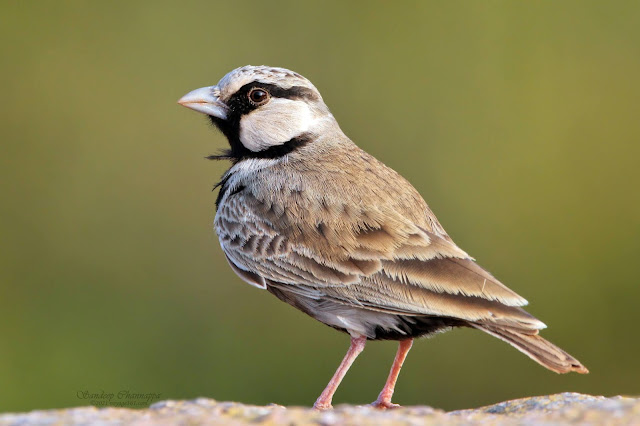 |
| Ashy-crowned sparrow-lark/Ashy-crowned finch-lark (Eremopterix griseus) |
 |
| Rufous-tailed lark (Ammomanes phoenicura) |
 |
| Long-tailed shrike or rufous-backed shrike (Lanius schach) |
 |
| Blue-faced malkoha/Small green-billed malkoha (Phaenicophaeus viridirostris) |
 |
| White-browed bulbul (Pycnonotus luteolus) |
 |
| Blue rock thrush (Monticola solitarius) |
 |
| Portrait of Brahminy Starling with its neck hackles. Also called brahminy myna (Sturnia pagodarum) |
 |
| Painted spurfowl - male (Galloperdix lunulata) |
 |
| Painted spurfowl - female (Galloperdix lunulata) |
 |
| Grey francolin in Morning glow (Francolinus pondicerianus) |
 |
| Painted Sandgrouse - male (Pterocles indicus) |
And the mammals:
 |
| Indian Sloth bear / ಕರಡಿ / भालू (Melursus ursinus). Conservation status: VULNERABLE |
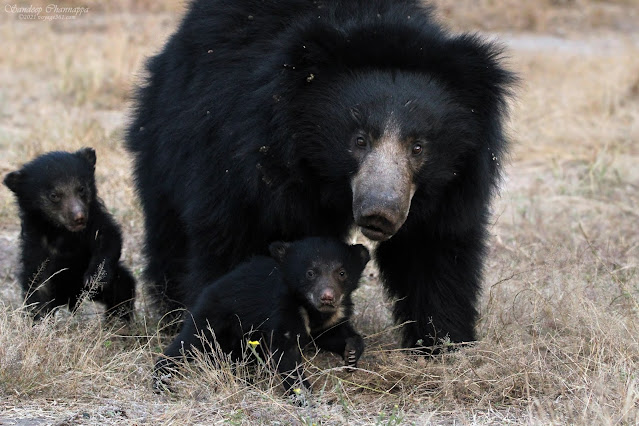 |
| Indian Sloth bear with her cubs |
 |
| Indian grey mongoose / ಮುಂಗಸಿ (Urva edwardsii) |
 |
| Ruddy mongoose / ಕೀರ (Urva smithii) |
 |
| Ankasamudra Bird Sanctuary ಅಂಕಸಮುದ್ರ ಪಕ್ಷಿಧಾಮ |
Species list spotted during the entire trip:
Lesser Whistling-Duck - Dendrocygna javanicaKnob-billed Duck - Sarkidiornis melanotos
Northern Shoveler - Spatula clypeata
Gadwall - Mareca strepera
Eurasian Wigeon - Mareca penelope
Indian Spot-billed Duck - Anas poecilorhyncha
Indian Peafowl - Pavo cristatus
Painted Spurfowl - Galloperdix lunulata
Gray Francolin - Ortygornis pondicerianus
Jungle Bush-Quail - Perdicula asiatica
Little Grebe - Tachybaptus ruficollis
Rock Pigeon - Columba livia
Eurasian Collared-Dove - Streptopelia decaocto
Laughing Dove - Streptopelia senegalensis
Painted Sandgrouse - Pterocles indicus
Greater Coucal - Centropus sinensis
Blue-faced Malkoha - Phaenicophaeus viridirostris
Asian Koel - Eudynamys scolopaceus
Gray-bellied Cuckoo - Cacomantis passerinus
Indian Nightjar - Caprimulgus asiaticus
Asian Palm-Swift - Cypsiurus balasiensis
Eurasian Moorhen - Gallinula chloropus
Eurasian Coot - Fulica atra
Gray-headed Swamphen - Porphyrio poliocephalus
White-breasted Waterhen - Amaurornis phoenicurus
Indian Thick-knee - Burhinus indicus
Black-winged Stilt - Himantopus himantopus
Red-wattled Lapwing - Vanellus indicus
Wood Sandpiper - Tringa glareola
Asian Openbill - Anastomus oscitans
Painted Stork - Mycteria leucocephala
Little Cormorant - Microcarbo niger
Great Cormorant - Phalacrocorax carbo
Indian Cormorant - Phalacrocorax fuscicollis
Gray Heron - Ardea cinerea
Purple Heron - Ardea purpurea
Great Egret - Ardea alba
Intermediate Egret - Ardea intermedia
Little Egret - Egretta garzetta
Cattle Egret - Bubulcus ibis
Indian Pond-Heron - Ardeola grayii
Black-headed Ibis - Threskiornis melanocephalus
Red-naped Ibis - Pseudibis papillosa
Black-winged Kite - Elanus caeruleus
Eurasian Marsh-Harrier - Circus aeruginosus
Rock Eagle-Owl - Bubo bengalensis
Brown Fish-Owl - Ketupa zeylonensis
Eurasian Hoopoe - Upupa epops
White-throated Kingfisher - Halcyon smyrnensis
Pied Kingfisher - Ceryle rudis
Green Bee-eater - Merops orientalis
Blue-tailed Bee-eater - Merops philippinus
Peregrine Falcon - Falco peregrinus
Rose-ringed Parakeet - Psittacula krameri
Plum-headed Parakeet - Psittacula cyanocephala
Small Minivet - Pericrocotus cinnamomeus
Common Iora - Aegithina tiphia
Spot-breasted Fantail - Rhipidura albogularis
Black Drongo - Dicrurus macrocercus
Ashy Drongo - Dicrurus leucophaeus
Bay-backed Shrike - Lanius vittatus
Long-tailed Shrike - Lanius schach
Rufous Treepie - Dendrocitta vagabunda
House Crow - Corvus splendens
Large-billed Crow - Corvus macrorhynchos
Cinereous Tit - Parus cinereus
Rufous-tailed Lark - Ammomanes phoenicura
Ashy-crowned Sparrow-Lark - Eremopterix griseus
Common Tailorbird - Orthotomus sutorius
Ashy Prinia - Prinia socialis
Plain Prinia - Prinia inornata
Red-vented Bulbul - Pycnonotus cafer
Yellow-throated Bulbul - Pycnonotus xantholaemus
White-browed Bulbul - Pycnonotus luteolus
Yellow-eyed Babbler - Chrysomma sinense
Large Gray Babbler - Argya malcolmi
Jungle Babbler - Argya striata
Common Babbler - Argya caudata
Rosy Starling - Pastor roseus
Brahminy Starling - Sturnia pagodarum
Chestnut-tailed Starling - Sturnia malabarica
Common Myna - Acridotheres tristis
Indian Robin - Copsychus fulicatus
Black Redstart - Phoenicurus ochruros
Blue Rock-Thrush - Monticola solitarius
Pied Bushchat - Saxicola caprata
Purple-rumped Sunbird - Leptocoma zeylonica
Purple Sunbird - Cinnyris asiaticus
Baya Weaver - Ploceus philippinus
Indian Silverbill - Euodice malabarica
Red Avadavat - Amandava amandava
House Sparrow - Passer domesticus
Western Yellow Wagtail - Motacilla flava
White Wagtail - Motacilla alba
Paddyfield Pipit - Anthus rufulus
Comments
Post a Comment